


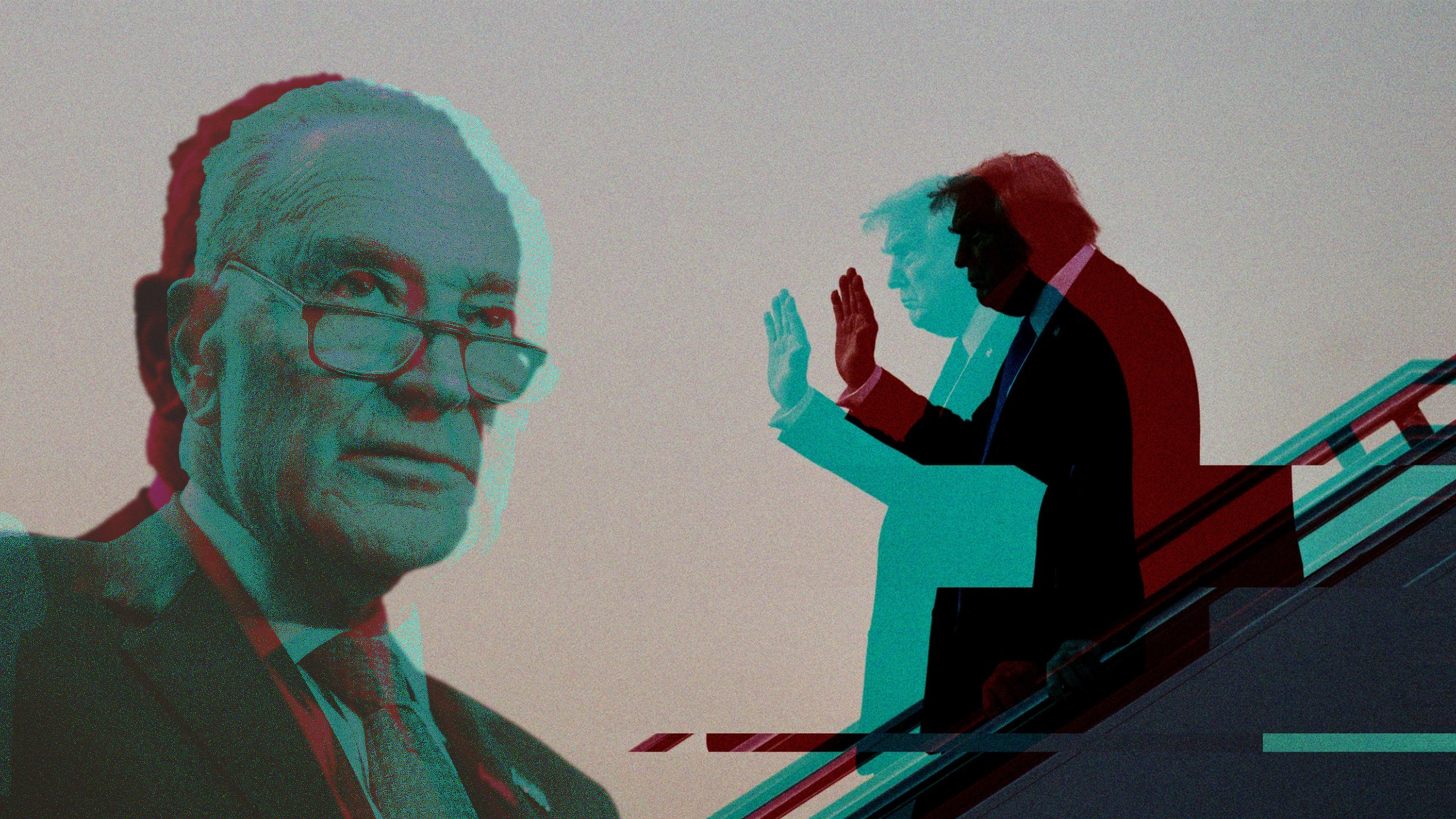
Before human beings were reading and writing, we were telling each other stories. Our relationship with storytelling not only predates civilization, it’s hardwired into our brains. It makes sense that politics, as a fundamentally human activity, is also intricately linked with narrative. The best political candidates have intriguing life stories (even if they aren’t true!). The best political ads tell a story. Democrats, though, tend to skip right to the moral of the story: we often fall for the trap of believing the righteousness of our cause speaks for itself without bringing people along for the “why.” In so doing, we violate the number one rule of good storytelling: Show don’t tell. When we tell – lecturing voters about high-minded abstractions – it leaves us open to accusations of being out-of-touch and arrogant. When we show – by positioning ourselves as the party that defends people rather than processes or institutions – we win.
People clearly didn’t feel defended by Democrats during Trump’s first two weeks. After watching Democrats wring their hands behind lecterns – telling them about “outrage” and “crisis” – as Donald Trump and Elon Musk took an authoritarian blowtorch to the Constitution, Americans took to the streets in all fifty states last Wednesday. They did so not only to oppose Musk’s brazen assault on the federal government, but also to vent their frustration with Democrats. Democratic leaders have hastily ditched their capitulationist “pick your battles” mantra, drafted legislation, held up Trump’s cabinet nominees, and taken to the streets. Democrats are at least doing something, I guess.
Simply doing something, however, is not a strategy. First, we continue to resort to cheap stunts: Senator Schumer could barely contain himself when he announced his anti-DOGE legislation would be called the “Stop the Steal Act.” I promise you Senator, no conservative is seething that you reclaimed their slogan, and if anything it just makes you look insincere when only moments before you repeatedly called Musk’s effort “dangerous.”
More importantly, we continue to expend a lot of energy making abstract appeals to “defending institutions.” This strategy is doomed to fail simply because many Americans believe those institutions are broken. They watched as the government bailed out bankers from their own greed in 2008, leaving ordinary people to lose their homes. They saw rich people make off with $200 billion – taxpayer money! – in the Paycheck Protection Program (PPP) loan scheme. They witnessed the combined might of the most powerful government on Earth unable to prosecute an obvious criminal or prevent him from once again becoming the President of the United States. Americans are familiar with these stories: The bad guy wins.
So many of them will cheer Donald Trump and Elon Musk for taking a battering ram to those institutions. Fifty-six percent of Americans think government is wasteful and inefficient, so they are unlikely to hear about slashing billions of dollars from the Department of Education and think “constitutional crisis.” Foreign aid is unpopular among Americans, and so Trump killing USAID will be “the end of a raw deal,” despite the real good it does around the world. Accordingly, when Democrats reflexively rush to defend these institutions as they did this week, they risk becoming – I almost hesitate to say – the “bureaucrat party.” Republicans will be able to say that the party that is panicking about losing out on government largesse, another story that will be easy to understand.
Instead, Democrats need to focus on the human consequences of Trump’s recklessness, especially if they have ready narrative appeal. The recent plane crashes present a readily understood narrative structure of beginning, middle, and end: Trump becomes president, Trump fires FAA employees, planes fall out of the sky. These have the added element of implicating the visceral popular anxiety about the safety of air travel. Some Democrats were quick to point out this sequence of events, but the Party writ large has not made it a part of its core message.
Donald Trump intuitively understands the narrative power of spectacle, and as president he has performatively exploited it to score political points without actually solving problems. For example, Trump last week made a public show of opening California reservoirs to combat Los Angeles wildfires. In typical Trumpian fashion, the “solution” was nothing of the sort: the fires were already contained and the reservoirs don’t even flow to the Los Angeles area. Democratic representative Ted Lieu pointed this waste out, astutely adding that many farmers were consequently going to be left without water this summer. Ideally, Lieu also would have found one such farmer and put him on camera, but if the price of produce skyrockets in the next year, Democrats should be ready to hammer Trump with it.
The consequences of Musk’s campaign against the federal government will in many cases only be felt slowly over time. Without accompanying political messaging, people moreover are often hard-pressed to think of ways government policy has helped or hurt them. Democrats therefore will have to be ready with a message that identifies viable stories and connects them to Trump and Musk as their victims emerge. Already Musk has signaled his next target is the Consumer Financial Protection Bureau (CFPB), a watchdog set up in response to the 2008 financial crisis that has returned $21 billion to consumers ripped off by banks and credit card companies. If and when Musk’s victim factory descends upon it, someone will eventually get ripped off again, and Democrats must be ready.
Connecticut Senator Chris Murphy seems to get it: On Thursday he condemned Trump’s “handover of our government to billionaires and the theft of wealth and resources from ordinary Americans to make the billionaires happier.” He doubled down Sunday morning on ABC by referring to “billionaires stealing government from the people.” This type of messaging is easy to understand because it connects what’s happening with the suffering of ordinary people.
In the same way Republicans mercilessly tied Laken Riley’s death to alleged Democratic toleration of open borders, Democrats must hang Musk and Trump’s abuses on the GOP with the faces of the people he hurt.
Sadly, there will be many stories to choose from.
You Are correct. It feels like the Democrats aren't understanding how to communicate the damage or potential damage being done 🤷
Great work, Keith!! Keep on keeping on.